
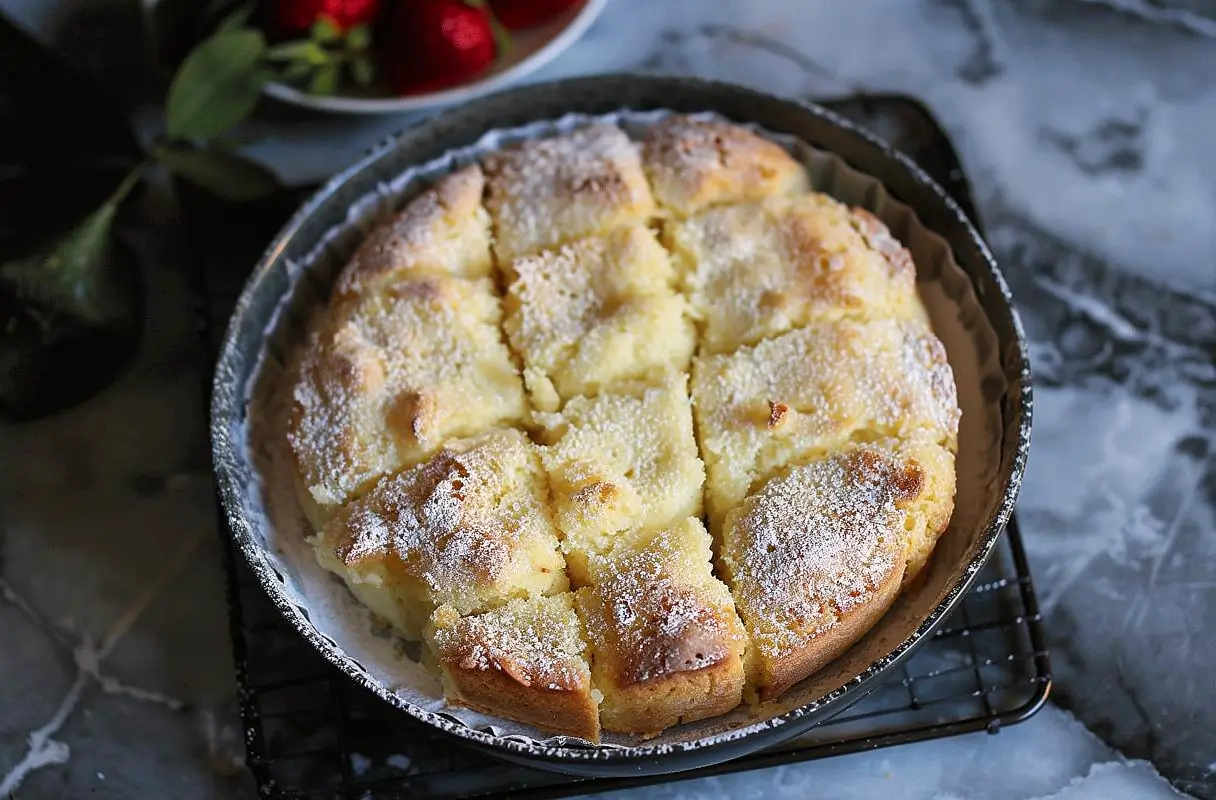
French butter cake is a simple, elegant dessert that proves you don’t need elaborate techniques to create something spectacular. This moist vanilla butter cake is all about celebrating one ingredient: butter. Rich, velvety, and impossibly tender, with a delicate sugared crust that shatters when you slice into it, this gateau breton style cake tastes like something you’d find in a Parisian pâtisserie—but you can make it at home with pantry staples.
This best butter cake recipe works because of careful technique: you cream the butter and sugar for a full 5 minutes to create maximum fluff, use room-temperature ingredients so the batter stays smooth, and bake it just until barely set. High-quality European butter makes all the difference—it’s richer, less watery, and creates that melt-in-your-mouth texture that makes this cake special.
Perfect for tea parties, elegant brunches, anyone learning to bake authentic french desserts, and dessert lovers who appreciate simple, buttery perfection.
Why You’ll Love This Butter Cake
- Incredibly rich and buttery – Tastes like pure European luxury
- Simple ingredients – No special equipment or fancy techniques
- Delicate sugared crust – Adds elegant texture and subtle crunch
- Better the next day – Flavors deepen and improve as it sits
- Versatile – Perfect for brunch, tea, or dessert
The “European” Butter Rule
Here’s what makes this easy french cake recipe different from American butter cakes: you use high-fat European-style butter like Kerrygold or Plugra instead of standard butter. European butter has about 82-84% fat compared to American butter’s 80%, which means less water content. That translates to a richer flavor and a finer, more tender crumb that literally melts on your tongue.
The other secret is creaming the butter and sugar for at least 5 full minutes on medium-high speed. This isn’t optional—it aerates the batter and creates the lift and lightness that makes this cake so special. Don’t rush this step.
Key Ingredients
High-quality unsalted butter (1 cup, softened) – European-style butter (Kerrygold, Plugra) is essential. Swap: Regular butter works but won’t be as rich.
Granulated sugar (1.5 cups) – Sweetens and helps create the structure.
Eggs (3 large, room temperature) – Must be room temp or batter will break.
Cake flour (1.5 cups) – Creates the tender crumb. Swap: All-purpose flour works but cake is slightly denser.
Heavy cream or whole milk (½ cup, room temperature) – Adds richness and moisture.
Vanilla extract (2 tsp) – Classic flavor.
Almond extract (½ tsp) – Traditional in French butter cakes, adds subtle depth.
Baking powder (1 tsp) – Gentle lift.
Fleur de sel or fine sea salt (½ tsp) – Enhances butter flavor, doesn’t taste salty.
Granulated sugar for topping – Creates the signature crackly crust.
Powdered sugar for dusting – Optional finishing touch.
Step-by-Step Instructions
1. Prep and preheat. Preheat oven to 350°F. Grease an 8 or 9-inch round cake pan and line the bottom with parchment paper. Grease the parchment. Bring butter, eggs, and cream to room temperature (this is critical).
2. Cream butter and sugar. In a large bowl or stand mixer, beat the softened butter and 1.5 cups sugar on medium-high speed for 5 full minutes. The mixture should become pale, almost white, and very fluffy. Don’t rush this—aeration is key.
3. Add eggs one at a time. Add eggs one at a time, beating well after each addition. The mixture should stay smooth and emulsified.
4. Add extracts. Mix in vanilla and almond extract.
5. Combine dry ingredients. In a separate bowl, whisk together cake flour, baking powder, and salt.
6. Alternate dry and wet. With the mixer on low, add the flour mixture in three additions, alternating with the cream (start and end with flour). Mix just until combined—don’t overmix.
7. Pour and sugar. Pour batter into prepared pan, smooth the top. Sprinkle a thin, even layer of granulated sugar over the top—this creates the crackly crust.
8. Bake. Bake for 40-45 minutes until the top is golden and a toothpick inserted in the center comes out with a few moist crumbs (not completely dry). Start checking at 38 minutes.
9. Cool. Let cool in the pan for 10 minutes, then turn out onto a wire rack. Let cool completely.
10. Serve. Dust with powdered sugar before serving. Best the next day.
Timing & Yield
- Prep: 15 minutes
- Cook: 40-45 minutes
- Total: 1 hour
- Yield: 8-10 servings
- Skill level: Beginner-friendly
Tips for Best Results
- Use European-style butter – Higher fat content makes it richer
- Room temperature everything – Prevents batter from breaking
- Cream for 5 full minutes – Creates the light, fluffy texture
- Don’t overbake – Toothpick should have moist crumbs, not be dry
- Sugar the top before baking – Creates signature crackly crust
- Let it rest overnight – Flavors deepen and improve
- Don’t skip the salt – Enhances butter flavor
Lemon version: Add 1 tbsp lemon zest and replace almond extract with lemon extract.
Variations
Berry topped: Serve with fresh berries and whipped cream.
Chocolate drizzle: Drizzle with melted dark chocolate after cooling.
Orange almond: Add 1 tbsp orange zest and increase almond extract to 1 tsp.
Rum-soaked: Brush cooled cake with rum simple syrup.
Serving Suggestions
- Fresh berries and whipped cream
- Hot tea or coffee
- Vanilla ice cream
- Lemon curd
- Powdered sugar dusting
Perfect for afternoon tea, elegant brunches, Mother’s Day, simple dinner parties, and anytime you want effortless elegance.
Storage & Reheating
Room temp: 3 days wrapped tightly. Actually improves after 24 hours.
Fridge: 5 days wrapped. Bring to room temp before serving.
Freezing: 2 months wrapped tightly. Thaw overnight in fridge.
FAQs
Why did my batter curdle?
Ingredients weren’t room temperature. Cold eggs or cream cause butter to seize. Always use room temp ingredients.
Can I use regular butter?
Yes, but European butter is significantly richer and creates better texture and flavor.
Why is the creaming step so long?
The 5-minute creaming aerates the batter and creates lift. This is what makes the cake light and tender instead of dense.
Can I make this ahead?
Yes! This cake actually tastes better the next day as the butter “cures” and flavors deepen.